How Does Physical Therapy Relieve Sciatica Nerve Pain Down the Leg?
Physical therapy relieves sciatica by reducing pressure and irritation on the sciatic nerve, calming nerve pain down the leg, and restoring strength and movement in the back and hips. Treatment combines directional exercises, nerve glides, manual therapy, and core and hip strengthening. Most people improve within about 4 to 6 weeks. In St. Paul, MN, expert back pain physical therapy and manual therapy help you move without pain. Book an evaluation today.
What Is Sciatica?
Sciatica is pain that travels along the sciatic nerve, the longest nerve in the body. It starts from nerve roots in the lower back, runs through the buttock, and continues down the back of the thigh into the leg and foot.
Sciatica is a symptom rather than a diagnosis. It means one of the nerve roots that form the sciatic nerve is compressed or irritated, usually in the lumbar spine.
Sciatica Symptoms
- Sharp, burning, or electric pain from the low back or buttock down one leg
- Pain that worsens with sitting, bending, coughing, or sneezing
- Numbness or tingling in the leg, foot, or toes
- Weakness when lifting the foot or pushing off
- Leg pain that is often worse than the back pain itself
What Causes Sciatica?
- Herniated or bulging disc: the most common cause, often in adults aged 30 to 50
- Lumbar spinal stenosis: narrowing of the spaces around the nerves, more common after 60
- Degenerative disc changes that reduce space for the nerve roots
- Spondylolisthesis: one vertebra slipping forward over another
- Piriformis syndrome: a tight or irritated deep hip muscle affecting the sciatic nerve in the buttock
Risk rises with prolonged sitting, heavy lifting with poor mechanics, weak core and hip muscles, and repetitive twisting in sport. Desk workers are especially affected, and physical therapy for desk workers addresses the sitting habits that load the lower back.
How Physical Therapy Relieves Sciatica
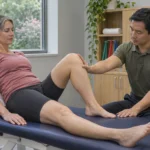
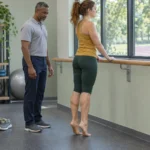
A physical therapist first identifies what is irritating the nerve and which movements make symptoms better or worse. At LAB Sports Therapy, your Physical Therapy Evaluation includes spine and hip mobility, nerve tension tests, strength, reflexes, and movement analysis.
Treatment may include:
- Directional preference exercises: specific repeated movements, such as gentle back extensions, that “centralize” pain from the leg back toward the spine
- Nerve glides (neural mobilization): gentle movements that help the sciatic nerve slide freely and reduce sensitivity
- Manual therapy: joint mobilization and soft tissue work to ease stiffness in the low back and hips
- Dry needling: thin needles release tight glute, piriformis, and low back muscles as part of dry needling therapy
- Core and hip strengthening: to support the spine and reduce load on irritated discs
- Movement and lifting retraining: safer bending, lifting, and sport mechanics
- Activity guidance: staying active within comfortable limits rather than long bed rest
Centralization, when leg pain retreats toward the back, is a strong sign that treatment is working.
Sciatica vs. Piriformis Syndrome
Both can cause buttock and leg pain. Sciatica from the spine often comes with back pain, symptoms below the knee, and changes with spinal movement. Piriformis syndrome usually causes deep buttock pain that worsens with sitting and hip rotation, with little back pain. Because treatment differs, an accurate evaluation matters. Hip-related causes are covered in what causes hip pain and how physical therapy can help.
Sciatica in Athletes and Active Adults
Runners, lifters, golfers, and hockey players often develop sciatica from repeated spinal loading, rotation, and tight hips. Rehab for athletes adds sport-specific strength, lifting technique, and a gradual return to training so symptoms do not flare when you get back to the gym, course, or rink.
How Long Does Sciatica Last?
Most sciatica improves within about 4 to 6 weeks with conservative care, though some cases take a few months. Starting physical therapy early helps manage pain, keep you moving, and lower the chance of the problem returning.
When Is Sciatica an Emergency?
Seek emergency care right away for numbness in the groin or inner thighs, new loss of bladder or bowel control, rapidly worsening leg weakness, or severe pain after major trauma. These signs can indicate cauda equina syndrome or another serious condition.
Sciatica Treatment in St. Paul, MN
LAB Sports Therapy offers expert physical therapy in St. Paul for nerve pain, including back pain physical therapy in St. Paul and hip pain care for athletes and active adults across St. Paul, Rosemount, and Minneapolis. Core stabilization, manual therapy, and therapeutic exercise are the three treatments for low back pain we rely on most. Contact us for a free 15-minute injury consultation.