Dry Needling vs. Acupuncture: What’s the Difference?
Dry needling and acupuncture both use thin, sterile needles, but they are different treatments. Dry needling is a modern physical therapy technique that targets myofascial trigger points to relieve muscle pain and restore movement. Acupuncture is rooted in Traditional Chinese Medicine and works along meridians to balance energy flow. In St. Paul, MN, LAB Sports Therapy offers expert dry needling combined with manual therapy. Book a consultation to see if it fits your recovery.
What Is Dry Needling?
Dry needling is an evidence-based treatment used by trained physical therapists to relieve muscle pain, reduce tension, and restore normal movement. A thin, sterile, single-use needle is inserted into a myofascial trigger point, a tight band of muscle fibers that restricts motion and refers pain.
When the needle reaches the trigger point, the muscle often produces a brief “local twitch response.” That twitch helps the tight fibers release so the muscle can relax and function normally again.
Dry needling is grounded in modern anatomy, neurology, and musculoskeletal science. It is not a standalone cure. At LAB Sports Therapy it is almost always combined with corrective exercise and movement training, so results last after the session ends. It is especially helpful for muscle tightness and strains that have not responded to stretching alone.
What Is Acupuncture?
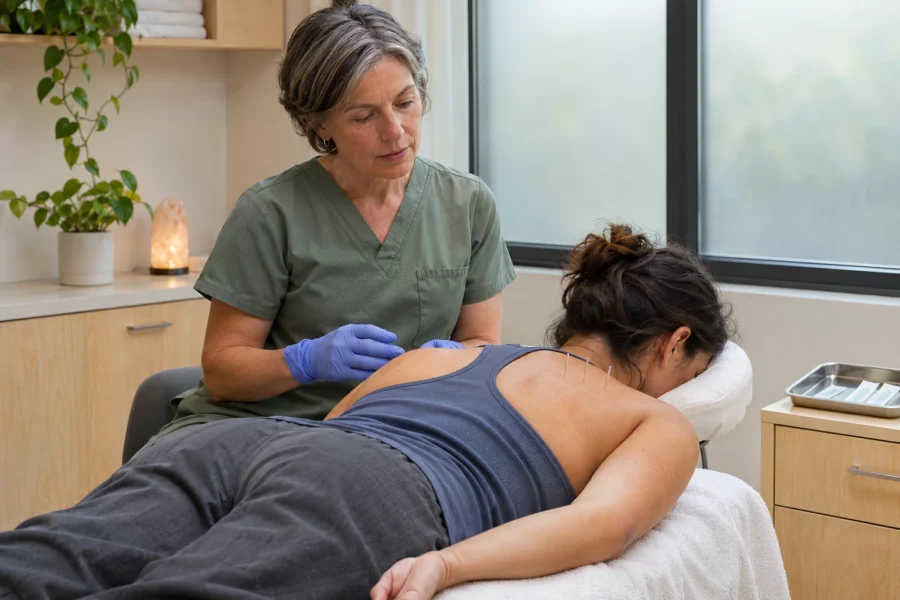
Acupuncture is a component of Traditional Chinese Medicine practiced for thousands of years. Licensed acupuncturists place needles at specific points along the body’s meridians, which in TCM are believed to carry qi, or vital energy.
Acupuncture is used for a wide range of concerns, including chronic pain, headaches, stress, sleep, and digestion. Needles are often left in place for 15 to 30 minutes while the patient rests. Some practitioners add heat, cupping, or gentle electrical stimulation. The focus is overall balance rather than releasing one specific muscle.
Dry Needling vs. Acupuncture: Key Differences
Philosophy
- Dry needling: Western medicine, based on muscle and nerve anatomy
- Acupuncture: Traditional Chinese Medicine, based on meridians and energy flow
Target
- Dry needling: myofascial trigger points in painful or tight muscles
- Acupuncture: fixed acupuncture points, which may be far from the painful area
Technique
- Dry needling: needles are inserted, moved briefly, and usually removed within seconds to minutes
- Acupuncture: needles typically stay in place for 15 to 30 minutes
Goal
- Dry needling: reduce muscle pain, release tension, and improve movement as part of rehab
- Acupuncture: restore balance and address a broad range of health concerns
Provider
- Dry needling: physical therapists and other clinicians with specific dry needling training
- Acupuncture: licensed acupuncturists who complete dedicated acupuncture programs
What Does Dry Needling Treat?
Dry needling helps muscles that stay tight despite stretching, foam rolling, massage, or rest. It is especially useful for deep muscles that are hard to reach with hands-on techniques.
Common problems include:
- Back pain and muscle spasm
- Shoulder pain and rotator cuff tightness
- Hip pain, glute, and hamstring tightness
- Knee pain linked to quad and IT band tension
- Ankle pain and calf tightness in runners
- Neck tension, tension headaches, and tendon problems
Does Dry Needling Hurt More Than Acupuncture?
Dry needling is generally well tolerated. You may feel a quick muscle twitch or a deep ache during treatment, which can feel stronger than acupuncture because the needle targets an irritated muscle. Mild soreness afterward typically resolves within one to two days. Your therapist explains each step first and adjusts the technique to your comfort and how your muscles respond.
Which Is Right for You?
Choose dry needling if your goal is to recover from a sports injury, release a stubborn tight muscle, or move better during rehab. Choose acupuncture if you want a whole-body TCM approach for wellness, stress, or broader health concerns. If you are unsure, a physical therapist can assess your pain and explain which approach best matches your symptoms and goals.
For athletes and active adults, dry needling works best inside a complete plan. At LAB Sports Therapy, every patient starts with a Physical Therapy Evaluation to find the cause of pain, then pairs dry needling in St. Paul with manual therapy and exercise. Modern technology in dry needling also helps your therapist target the right muscles more precisely.
Get Dry Needling in St. Paul, MN
LAB Sports Therapy St. Paul is a trusted sports physical therapy clinic, with care by request in Rosemount. Ready to release stubborn muscle pain? Contact us for a free 15-minute injury consultation.