Shoulder Pain When Lifting Your Arm? Here’s What It Could Mean
Does your shoulder hurt when you reach overhead, put on a shirt, lift weights, or reach behind your back? You’re not alone. Shoulder pain can make simple daily activities and exercise surprisingly difficult.
While occasional soreness may improve with rest, persistent shoulder pain when lifting your arm may indicate an underlying issue that needs attention.
Common Reasons Your Shoulder Hurts When You Lift Your Arm
Rotator Cuff Problems
The rotator cuff helps stabilize and move your shoulder. Repetitive overhead activities, sports, or weightlifting can irritate these muscles and tendons, causing pain and weakness.
Shoulder Impingement
Certain shoulder movements can irritate tissues around the joint, particularly when raising your arm overhead. This can make reaching, lifting, and exercise uncomfortable.
Muscle or Tendon Strain
A sudden increase in exercise, heavy lifting, or repetitive movements can strain the muscles or tendons around your shoulder.
Shoulder Stiffness
Limited mobility after an injury, surgery, or period of inactivity can make normal shoulder movements painful or difficult.
Previous Shoulder Injury
Even after an injury has healed, weakness or movement limitations may remain. These problems can sometimes cause pain when you return to normal activities or sports.
When Should You See a Physical Therapist?
Consider getting your shoulder evaluated if:
- Pain continues or keeps returning
- You have difficulty lifting your arm
- Your shoulder feels weak
- Pain interferes with exercise or sports
- You have difficulty sleeping because of shoulder pain
- Everyday activities are becoming difficult
A physical therapist can evaluate your strength, mobility, movement patterns, and functional limitations to determine what may be contributing to your symptoms.
How Can Physical Therapy Help Shoulder Pain?
Shoulder pain physical therapy focuses on addressing the underlying factors contributing to discomfort rather than simply treating the symptoms.
Depending on your evaluation, treatment may include:
Therapeutic Exercise
Specific exercises can strengthen the rotator cuff, shoulder blade muscles, and surrounding structures. Building strength can improve stability and help your shoulder handle everyday and athletic demands.
Mobility Exercises
Restricted mobility can affect how your shoulder moves. Targeted stretching and mobility exercises can help restore range of motion and improve movement quality.
Manual Therapy
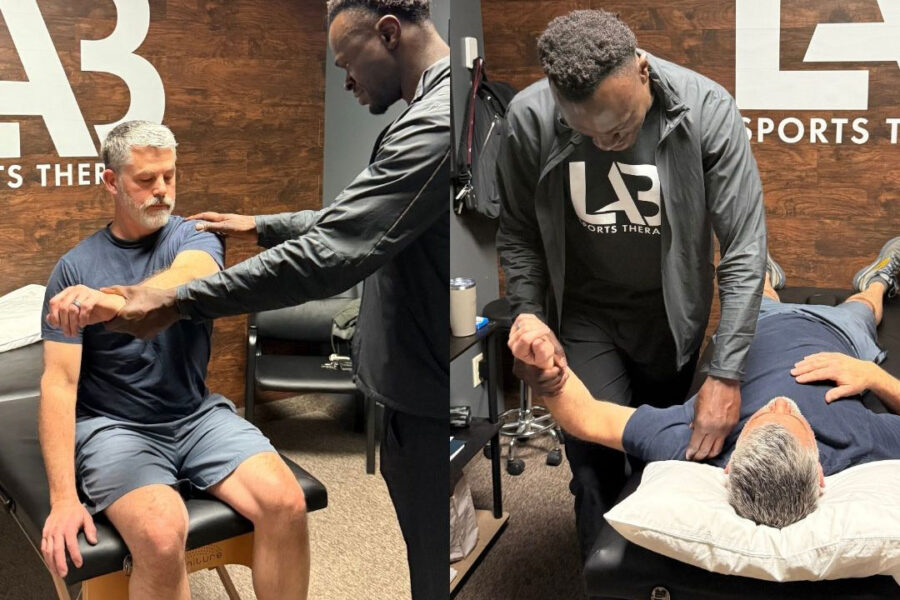
Hands-on techniques may be used to address joint stiffness and soft tissue restrictions. Manual therapy can complement exercise-based rehabilitation and help improve movement.
Movement Retraining
Sometimes the way you move contributes to repeated stress on the shoulder. Your physical therapist can help you improve movement mechanics during reaching, lifting, throwing, and other activities.
Sport-Specific Rehabilitation
For athletes, rehabilitation can gradually progress toward movements that replicate the demands of their sport. This may include throwing, serving, swimming, lifting, or other overhead activities.
Can You Exercise With Shoulder Pain?
You don’t necessarily have to stop all exercise. However, repeatedly performing movements that increase your pain may slow your recovery.
A physical therapist can help you determine which activities should be modified and which exercises can safely help you maintain strength and mobility while recovering.
Don't Ignore Persistent Shoulder Pain
Shoulder pain can have many causes, and the right treatment depends on what’s contributing to your symptoms. If your pain is affecting your workouts, sports, or everyday activities, getting an evaluation can help you understand the problem and choose an appropriate recovery plan.
At LAB Sports Therapy, personalized physical therapy helps patients improve shoulder strength, mobility, and function while working toward a safe return to the activities they enjoy.