When Is It Safe to Return to Sports After Concussion Recovery?
It is safe to return to sport after a concussion only when symptoms have fully resolved at rest and during exercise, you have completed a graded return-to-play protocol, and a qualified provider has cleared you. Most athletes take about two to four weeks. In St. Paul, MN, vestibular and concussion rehabilitation through our physical therapy services and return-to-sport testing guide each step safely. Book an evaluation today.
What Happens to the Brain After a Concussion?
A concussion is a mild traumatic brain injury caused by a blow to the head or a hit to the body that jolts the brain. It changes how brain cells work for a period of time, even when scans look normal.
Common symptoms include:
- Headache or pressure in the head
- Dizziness, vertigo, or balance problems
- Blurred vision and light or noise sensitivity
- Feeling foggy, slowed down, or having trouble concentrating
- Neck pain, fatigue, irritability, and sleep changes
Symptoms may appear right away or develop over 24 to 48 hours. Any athlete with a suspected concussion should stop playing immediately.
How Long Does Concussion Recovery Take?
Most adults and teens recover within about two to four weeks, although every concussion is different. Younger athletes, those with a history of prior concussions, and people with migraines or high early symptoms may need longer.
When symptoms last beyond four weeks, the condition is often called persistent post-concussive symptoms. These cases usually respond well to targeted rehab that addresses the neck, the vestibular system, vision, and exercise tolerance.
Is Complete Rest Best After a Concussion?
Not for long. Current sport concussion guidance recommends relative rest for the first 24 to 48 hours, then a gradual return to light daily activity and walking as long as symptoms do not significantly worsen. Strict “dark room” rest for days can actually slow recovery.
The 6-Step Return-to-Sport Protocol
Return to play follows a stepwise plan. Each step usually lasts at least 24 hours. If symptoms flare, the athlete drops back to the previous step.
- Symptom-limited activity: daily tasks, walking, and return to school or work as tolerated
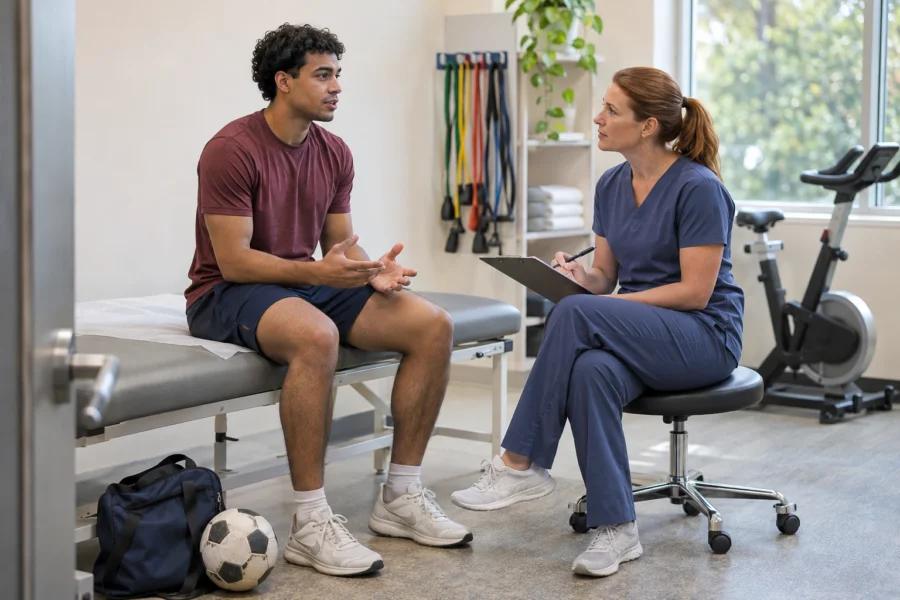
- Light to moderate aerobic exercise: stationary bike or walking with gradually increasing heart rate, no resistance training
- Sport-specific exercise: running or skating drills with no head impact risk
- Non-contact training drills: harder practice, passing drills, and progressive resistance training
- Full-contact practice: only after medical clearance
- Return to competition: normal game play
Returning to school or work should come before a full return to sport. Students may need temporary academic adjustments during recovery, such as shorter days, breaks from screens, or extra time on tests.
When Is It Safe to Return to Sport?
An athlete is ready when:
- There are no symptoms at rest or during full exertion
- Balance, vision, and cognitive function have returned to normal
- The full return-to-sport protocol is complete without setbacks
- Neck strength and sport-specific movement are restored
- A qualified health care provider has given clearance
Under Minnesota’s youth concussion law, a youth athlete with a suspected concussion must be removed from play and cannot return until symptoms are gone and a provider trained in concussion management gives written permission.
Why Returning Too Early Is Dangerous
A second hit before the brain has healed can cause more severe symptoms and a longer recovery. In rare cases, young athletes can suffer life-threatening brain swelling. Returning early also raises the risk of other injuries, because slower reaction time and poor balance affect performance. That is why objective testing, not just “feeling fine,” should guide the final decision to return.
How Physical Therapy Helps Concussion Recovery
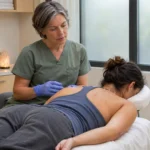
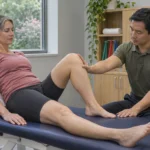
Physical therapy speeds a safe recovery when symptoms linger or return during exercise. At LAB Sports Therapy in St. Paul, care may include:
- Vestibular rehabilitation for dizziness, vertigo, and balance loss
- Gaze stabilization and eye-tracking exercises
- Manual therapy for neck pain and cervicogenic headaches
- Graded aerobic exercise to rebuild tolerance
- Sport-specific drills and objective readiness testing
Dr. Brian Ishola, DPT, SCS, CSCS, is an ImPACT Trained Physical Therapist with specialized training in concussion and vestibular disorders. Positional vertigo after a head injury often responds to the Epley maneuver, and objective return-to-sport testing confirms readiness before full competition.
Concussion Rehab in St. Paul, MN
LAB Sports Therapy provides physical therapy St. Paul athletes rely on for safe concussion recovery, including vestibular and concussion rehabilitation. We help athletes across St. Paul, Rosemount, and Minneapolis return to sport with confidence. Contact us for a free 15-minute injury consultation.